Guides · Rules
Electric trike laws in the US: license, classes and where you can ride
By Linda Garrett · · 7 min read01Is an electric trike a bicycle in the eyes of the law?
For federal product rules, yes, as long as it has pedals and a modest motor. The definition sits in 15 U.S.C. 2085. A "low-speed electric bicycle" is "a two- or three-wheeled vehicle with fully operable pedals and an electric motor of less than 750 watts (1 h.p.), whose maximum speed on a paved level surface, when powered solely by such a motor while ridden by an operator who weighs 170 pounds, is less than 20 mph".
Read it slowly, because every word does something. Two or three wheels: trikes are in. Fully operable pedals: a throttle-only scooter is out. Less than 20 mph on motor power alone: that's the throttle speed, not what you reach by pedaling.
What the definition does is place these machines under the Consumer Product Safety Commission and its bicycle requirements, as consumer products. It says how they must be built and sold. It doesn't say where you may ride one. That part belongs to the states.

02What are Class 1, Class 2 and Class 3?
Most state laws sort electric bicycles into three classes. The wording below is the one used in the PeopleForBikes summaries for California, Florida, Texas and Arizona.
Class 1: the motor helps only when you pedal, and stops helping at 20 mph.
Class 2: the motor can be worked by a throttle, and stops helping at 20 mph.
Class 3: the motor helps only when you pedal, and stops helping at 28 mph.
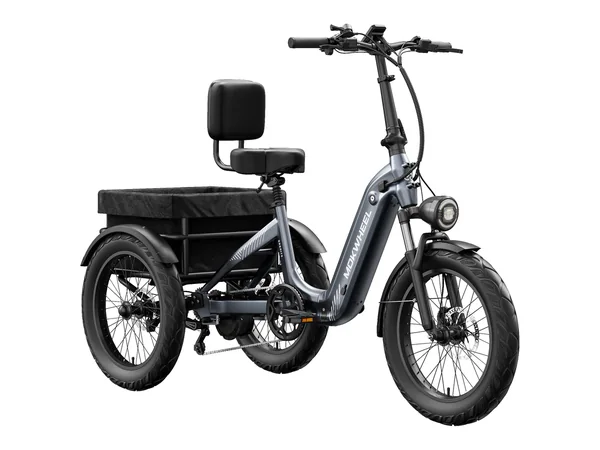
Nearly every trike in our comparison has a throttle and a top speed of 20 mph or less, which is the Class 2 description. Mokwheel prints "Class 2" on the Granite's spec sheet. Many brands don't print a class at all. If the page is silent, ask the seller which class the trike is sold as and whether a class label is on the frame.
New York is a reminder that states differ. Its summary describes Class 1 and 2 the same way, but its Class 3 is a throttle bike limited to 25 mph that exists only in cities of a million people or more, and the usual 28 mph Class 3 isn't permitted there.
03Do you need a license, registration or insurance?
In the five state summaries we read, no. The sentence is the same in the California, Florida, Texas and Arizona documents: "Electric bicycles are not subject to the registration, licensing, or insurance requirements that apply to motor vehicles." New York's says the same of Class 1 and Class 2 electric bicycles.
The same documents say electric bicycles are regulated like bicycles, and that the same rules of the road apply to both. So no plate and no driver's license, but also no riding against traffic and no running red lights.
We read five states, not fifty. PeopleForBikes keeps a page with one summary per state; find yours there, then confirm with your state's transportation department or DMV if anything about your trike is unusual (more than 750 W, faster than 20 mph on the throttle, no pedals).
Video: "E-Bike Laws & Classes Explained | Class 1, 2, 3 Electric Bikes Made Simple | Trek Bikes", Trek Bicycle on YouTube. Not made by us; chosen because it shows the trike or the topic clearly.
04Where can you ride an electric trike?
This is where states and cities really differ, and where a trike's width adds a practical limit of its own.
Florida: Class 1, 2 and 3 electric bicycles may be ridden wherever bicycles are allowed, including bicycle paths and multi-use paths. A city, town or state agency with jurisdiction can restrict where they're allowed.
Arizona: electric bicycles are allowed on sidewalks and bike paths; local governments can restrict their use under motor power on bike paths.
California: local governments have the authority to restrict electric bicycles under motor power on bike paths, and there are certain access restrictions for Class 3.
Texas: electric bicycles generally may not be restricted in places where bicycles are allowed to operate, though the state or a local authority can set certain restrictions.
New York: Class 1 and 2 have access to roads with speed limits of 30 mph or less, including bike lanes, and to some bike paths; cities and towns have extensive local authority, including the ability to prohibit electric bicycles.
All five summaries date from 2022 or 2023. Laws move, so treat them as a starting point. And measure: a path gate or a bollard gap narrower than your trike (26 to 37 inches for the ones we compare) stops you whatever the law says.
05What about helmets and age limits?
Again by state. Florida requires a helmet for operators and passengers under 16. California requires helmets for riders of Class 3 electric bicycles and doesn't let anyone under 16 ride one. Texas sets 15 as the minimum age to operate a Class 3. Arizona's summary says helmets aren't required and there's no minimum age.
Whatever your state requires, the Consumer Product Safety Commission advises always wearing a bicycle helmet. On a trike you're unlikely to fall from losing your balance. You share the road with cars all the same.
06Can you take an electric trike into a national park?
Often, on the roads and trails where ordinary bicycles are allowed, if the park's superintendent has authorized e-bikes. The National Park Service rule defines an electric bicycle as "a two- or three-wheeled cycle with fully operable pedals and an electric motor of not more than 750 watts", uses the same three classes, and lets each superintendent decide which classes go where.
So three wheels are no obstacle, but each park is its own case. Look up the park's e-bike page or call the visitor center before you load the trike. State parks follow their own rules: Florida's allow Class 1 wherever bicycles go, Arizona's keep e-bikes to park roads and motorized trails, according to the same PeopleForBikes summaries.
07Is a 750-watt trike still an e-bike?
Good question, and the honest answer is: read the label and ask. Ten of the fifteen trikes we compare are sold with a "750 W" motor. The federal definition says "less than 750 watts"; the National Park Service rule says "not more than 750 watts". Brands also publish peak figures well above the rating (1,310 W for the Lectric XP Trike2 750, 1,400 W for the MaxFoot MF-30), and the definitions we read give a single figure without saying whether it means the rating or the peak.
We aren't lawyers and we won't settle that for you. Three practical steps do the job. Ask the brand which class the trike is sold as. Check that its throttle stops at 20 mph or below. And if a page mentions a higher assisted speed, as sixthreezero's does for the EZ Transit (28 mph with pedal assist in one paragraph, "up to 16 mph" in the headline), get the real figure in writing, because 28 mph is Class 3 territory with its own rules.
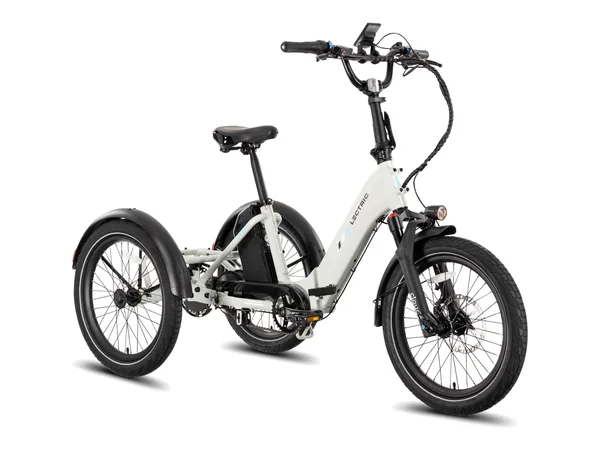
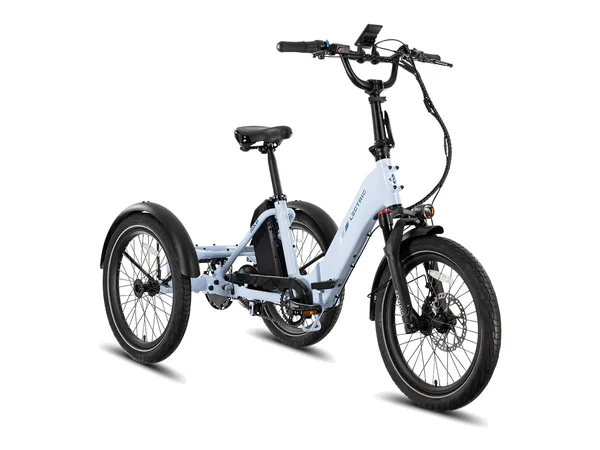
If you'd rather stay far from the line, the 500 W trikes are simple: the Lectric XP Trike2 (500 W, 14 mph), the Mokwheel Granite (500 W, listed as Class 2) and the Emojo Caddy Pro.
08What should you check before you buy?
Five minutes, five checks.
One: your state's page on PeopleForBikes, for classes, helmets and paths. Two: your city or county website, searching "electric bicycle" with the name of the path or boardwalk you plan to use. Three: your homeowners' association or retirement community rules, which can be stricter than the law about what rides on its paths and where it charges. Four: the trike's class, motor rating and throttle speed, in writing from the seller. Five: your insurance. A trike needs no insurance in the states we read, but ask your homeowner's or renter's insurer whether theft and liability are covered; policies differ.
Then choose the trike. Our ranking of fifteen lists the motor and top speed of each one.
This guide helps you buy; it isn't medical or legal advice. Rules for electric bicycles change from state to state and city to city, and only your doctor knows whether riding suits your health: check both before you buy.